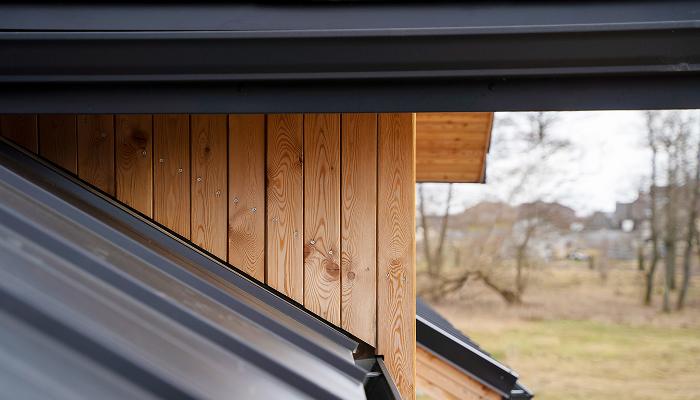
Roof flashing is one of the less visible parts of a roofing system, yet it plays a critical role in keeping water out of the building. Flashing protects areas where roofing materials meet walls, chimneys, vents, valleys, edges and other penetrations.
For Ottawa homeowners, these details deserve particular attention. Rain, snow, ice and repeated freeze-thaw cycles can expose weak connections and create pathways for water. Understanding what is roof flashing, where it is used and how to recognize problems can help prevent a small defect from becoming an expensive repair.
What Is Roof Flashing and Why Does It Matter?
So, what is flashing on a roof? In simple terms, it is a water-management component installed at vulnerable transitions. Instead of relying only on sealants or roofing materials to stop water, properly designed flashing helps direct it away from joints and back onto the intended drainage path.
The U.S. Department of Energy’s Building America guidance describes water-managed roof assemblies as systems that combine membranes and metal flashing at strategic locations. Valleys, roof-wall intersections, chimneys and roof penetrations are among the areas that require particular attention.
A properly designed flashing roof detail should work with the surrounding roofing materials rather than act as an isolated patch.
Key functions include:
- directing water away from vulnerable joints;
- protecting roof-to-wall transitions;
- managing runoff around chimneys, vents and penetrations;
- reducing the risk of water reaching roof decking and wall assemblies;
- supporting the long-term performance of the roof and flashing system.
This is why roof flashing details should be considered part of the complete roofing assembly, not simply a piece of metal added when a leak appears.

Where Is Roof Flashing Used?
Flashing is needed wherever water could collect, change direction or enter a joint between different building components. The exact configuration depends on the roof design, materials and surrounding construction.
Common applications include:
Roof-to-wall connections
A roof to wall flashing detail helps manage water where a sloped roof meets a vertical wall. Sidewall and end-wall conditions require carefully planned overlaps so water continues downward rather than behind the wall cladding.
At the lower end of a roof-wall intersection, kick out flashing on roof details can divert runoff into the gutter. Building America specifically recommends kick-out flashing at roof-wall intersections because uncontrolled runoff can reach the wall assembly.
Chimneys
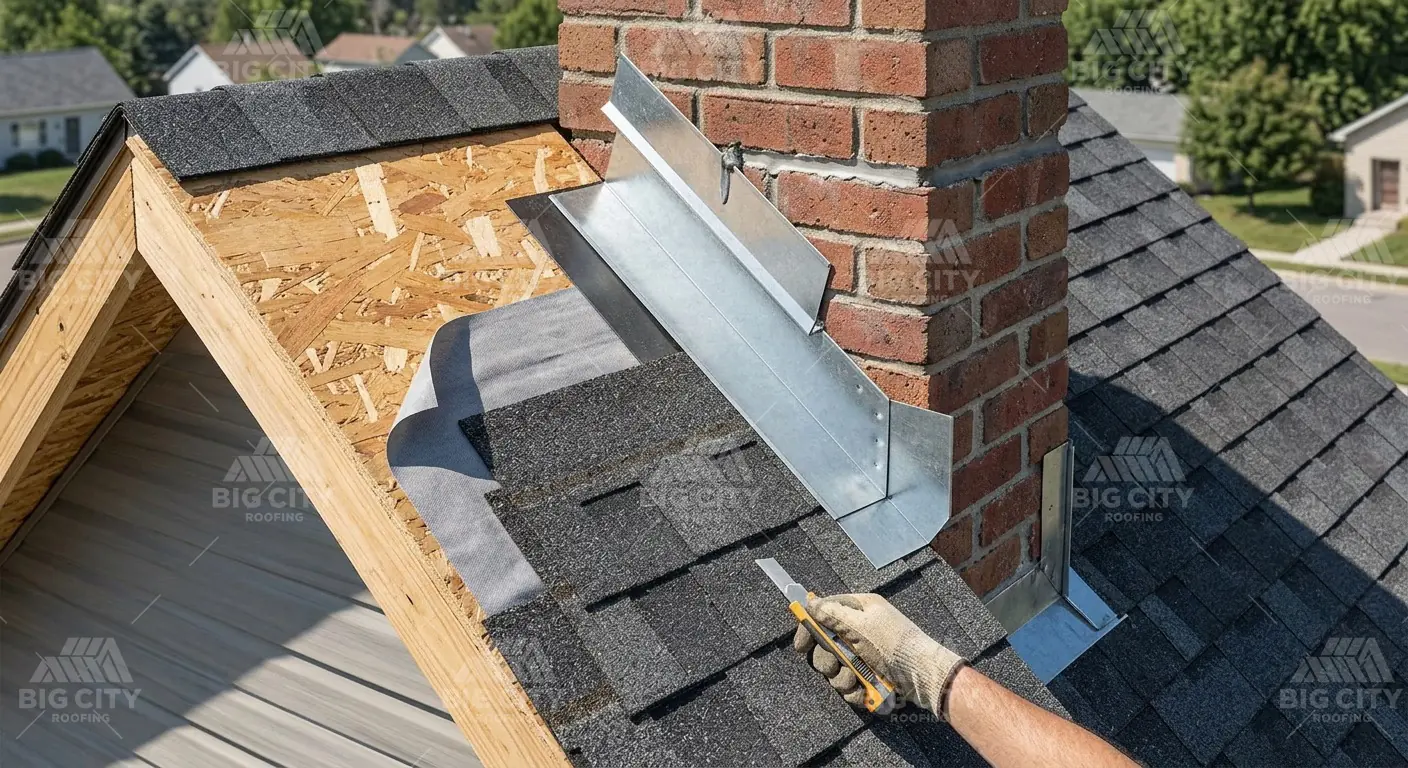
Chimney roof flashing protects one of the most demanding roof penetrations. Depending on the construction, the system may include base flashing, step flashing and counter flashing.
With a metal roof, metal roof chimney flashing must also account for the movement and profile of the panels. A generic detail may not provide the same result as flashing designed for the specific roofing system.
Valleys
A valley concentrates water from two roof slopes, making correct drainage particularly important. Roof valley flashing or a properly detailed valley flashing roof system helps direct runoff toward the eaves.
The Building Science Education guidance identifies valleys among the roof areas most vulnerable to water intrusion.
Vents and pipes
A roof vent flashing assembly seals and manages water around penetrations such as plumbing vents. Similar principles apply to roof pipe flashing: the flashing must fit the penetration and integrate correctly with the surrounding roofing material.
Roof edges
At the perimeter, roof edge flashing and roof drip edge flashing help control runoff at the eaves and rakes. These details also need to work with the underlayment, roofing material and drainage system.
Roof Flashing Types: What Should Homeowners Know?
There is no single universal flashing detail for every roof. The appropriate roof flashing types depend on the location, roof covering and construction.
Common examples include:
- step flashing roof details at roof-to-wall intersections;
- apron flashing at lower wall transitions;
- counter flashing at masonry and chimney locations;
- valley flashing at roof intersections;
- drip edge flashing at roof perimeters;
- kick-out flashing where roof runoff meets a wall and gutter;
- penetration flashing around pipes and vents.
For metal roofing, metal roof flashing types must also accommodate the panel profile and movement. Metal roof flashing can be formed from different materials and configurations, but compatibility is essential. The objective is not simply to cover a joint; it is to create a reliable path for water.
What About Window Flashing?
Roofing and exterior wall protection overlap around windows, particularly where a roof intersects a wall containing an opening.
Window flashing helps manage water around the window opening and directs it toward the exterior drainage plane. A window flashing detail should work with the wall’s weather-resistant barrier, cladding and sill drainage rather than depending on caulking alone.
Homeowners may encounter products such as self-adhered flashing membranes and metal components. Window flashing metal or aluminum window flashing can provide a durable exposed or formed component, depending on the application.
The same principle applies to doors. Proper door flashing and flashing around exterior openings help keep water from entering the wall assembly.

Capping vs. Flashing: What Is the Difference?
The terms are sometimes used interchangeably, but they serve different purposes.
| Capping |
Flashing |
| Protects and finishes exposed edges, trims and exterior components |
Manages water at joints, seams and roof transitions |
| Window capping and aluminum capping protect and finish window and door frames |
Common around valleys, roof edges, walls and penetrations |
| Garage door aluminum capping covers exposed frame surfaces and improves weather resistance |
Directs water away from vulnerable areas to prevent intrusion |
Capping provides a protective, finished exterior layer. For example, capping windows with aluminum can reduce exposure of vulnerable trim to rain, snow and seasonal deterioration. Flashing by contrast, focuses primarily on water management.
In practice, the two systems may work together. A professional assessment can determine whether a problem requires roof flashing repair, capping, component replacement, or correction of the underlying drainage detail.
How Can You Tell If Roof Flashing Needs Attention?
A roof leak does not always appear directly below the failed flashing. Water can travel through roof and wall assemblies before becoming visible indoors.
Look for warning signs such as:
- water stains on ceilings or upper walls;
- dampness around chimneys or roof-wall intersections;
- deteriorated sealants or visible gaps;
- rust, corrosion or displaced metal;
- damaged areas around vents or pipes;
- recurring leaks after rain or snowmelt;
- moisture appearing near windows below a roof intersection.
A roof flashing leak should not automatically be treated with another layer of sealant. If the underlying flashing is poorly positioned, damaged or incorrectly integrated, a surface patch may only hide the problem temporarily.
When Is Roof Flashing Repair Enough?
Not every flashing problem requires a complete roof replacement. If the roofing system remains serviceable and the issue is localized, targeted roof flashing repair may be the more appropriate solution.
Replacement may be more suitable when flashing is extensively corroded, repeatedly failing, incorrectly installed or incompatible with a newer roofing system.
The important step is identifying the actual failure point before choosing the repair method. A visible stain is evidence of water entry, but it is not necessarily the location where water entered.
This is where professional inspection provides value. The goal should be to trace the water path, assess surrounding materials and determine whether the flashing, roofing, wall transition or penetration is responsible.
Why Choose Big City Roofing for Flashing and Capping?
Big City Roofing treats flashing as part of the complete building envelope rather than an isolated piece of metal. The company provides roofing, repairs, siding, housewrap, flashing and capping services for Ottawa and the surrounding area.
The process is designed around documented assessment and quality control. Depending on the project, homeowners receive an on-site assessment, photographs, a written scope and project-manager oversight. The company also states that cleanup includes debris removal and a magnetic nail sweep.
That approach matters when the flashing problem is connected to other parts of the building envelope. A roof-wall junction, window, chimney or penetration cannot always be evaluated correctly in isolation.
For homeowners considering roof flashing installation, repair or related window capping and exterior finishing, the first step is understanding what is actually failing. Big City Roofing can assess the existing condition and identify the appropriate scope before work begins.